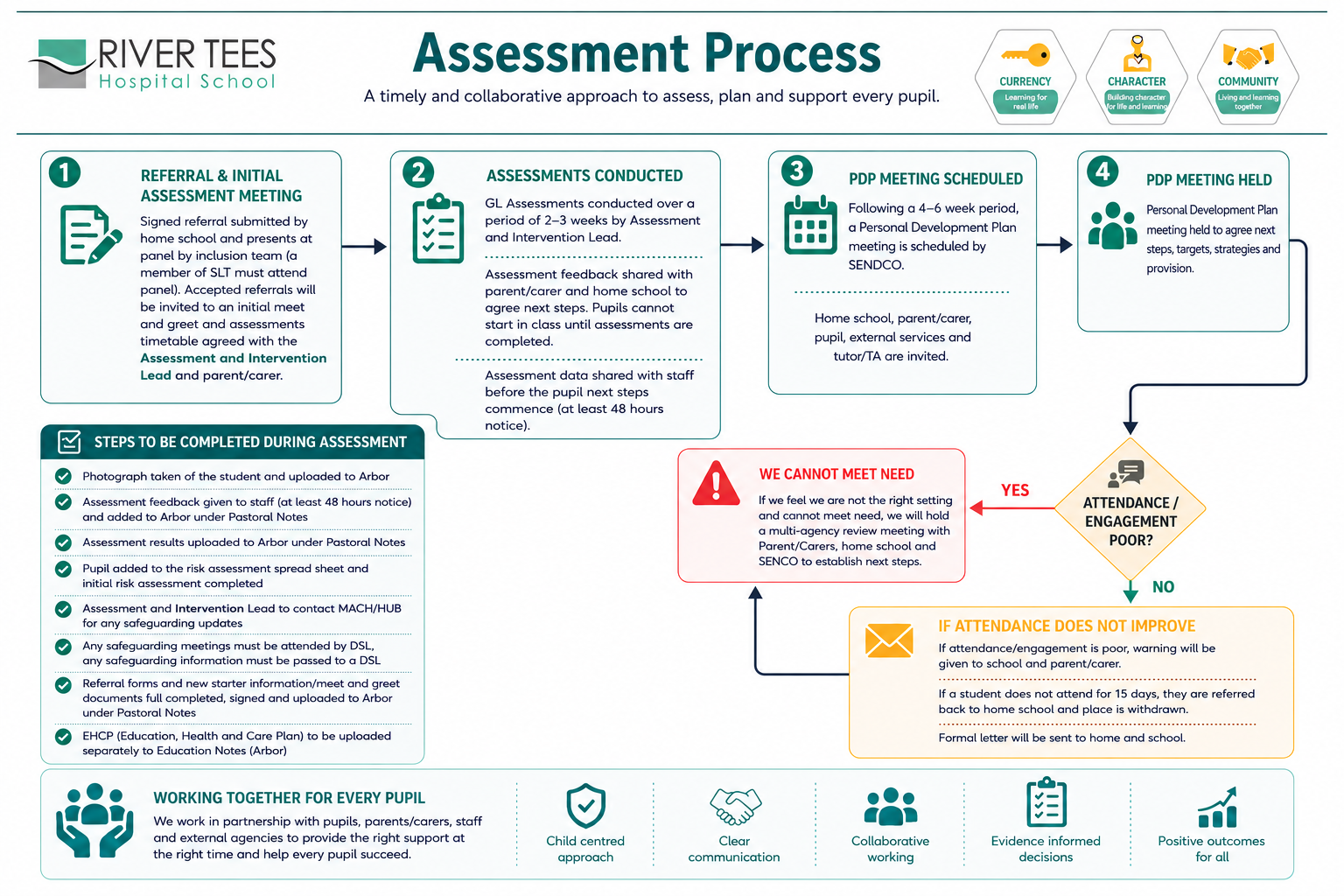
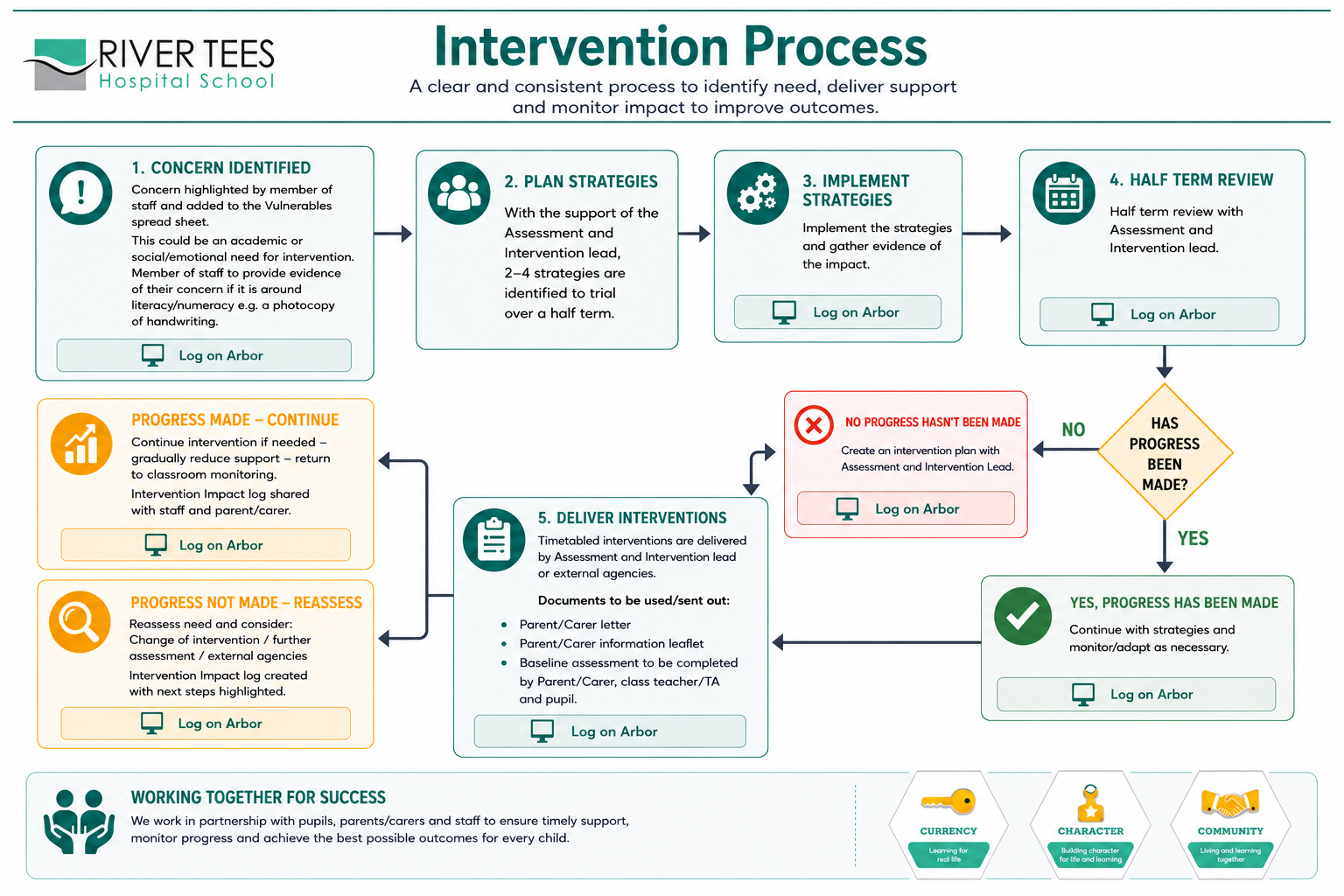
Once a pupil feels comfortable and ready, we begin a more comprehensive assessment process.
Our assessments are designed to give us a rounded understanding of the whole child, helping us identify strengths, barriers to learning and areas where additional support may be beneficial.
Where appropriate, assessment is informed by information from healthcare professionals, the pupil’s home school, parents/carers and other professionals involved in their care.
The information gathered helps us to develop a personalised education pathway and identify appropriate teaching, pastoral and therapeutic support.
Academic Assessment
We use a range of recognised assessments to establish each pupil’s current levels of attainment and identify specific areas for development, including:
- Reading, comprehension and spelling age
- Dyslexia and Dyscalculia screening
- DASH – Detailed Assessment of Speed of Handwriting
- English – GCSE Indicator
- Mathematics – GCSE Indicator
- Science – GCSE Indicator
This information enables our teachers to identify gaps, recognise existing strengths and ensure learning is pitched appropriately.
Personal Development and Wellbeing
Academic progress is only one part of a pupil’s journey. We also consider their wider personal development, wellbeing and readiness to engage with learning.
Our assessment approach includes:
Thrive Baseline Skills Assessment
This helps us develop an understanding of a pupil’s current social and emotional development and identify areas where targeted support may help them to feel more confident, connected and ready to learn.
My Family Tree
This provides an opportunity to understand the people, relationships and experiences that are important to each pupil, helping staff to develop a more personalised understanding of their background and support network.
EPOCH Wellbeing Measure
The EPOCH measure helps us explore five positive characteristics associated with wellbeing:
- Engagement
- Perseverance
- Optimism
- Connectedness
- Happiness
The assessment helps us recognise individual strengths while identifying areas where additional support may be beneficial. It contributes to our understanding of pupils’ positive psychological functioning and helps inform personalised approaches to wellbeing and personal development.